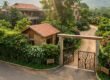
In the heart of an Andhra Pradesh summer, temperatures can easily soar past 40°C. For many, the immediate solution is to crank up the air conditioning, leading to massive electricity bills and a disconnected indoor experience.
At Lekhya Greenlife, we believe a farmhouse should be a sanctuary of coolness, not a concrete oven. By using advanced sustainable materials and ancient thermal principles, we build homes that stay 4–8°C cooler than the outside air—naturally.
Here is how we use the “Science of Cool” to design your retreat.
1. Beyond Red Bricks: The Power of AAC and Agrocrete
Traditional red bricks absorb and hold heat, radiating it into your living room long after the sun has set. We’ve moved toward high-performance alternatives:
- AAC Blocks (Autoclaved Aerated Concrete): These blocks contain millions of tiny air pockets that act as a superior thermal barrier. Heat struggles to pass through them, keeping your interiors steady and comfortable.
- Agrocrete: One of our favorite innovations, this carbon-negative building material is made from processed agricultural residue. It’s lightweight, incredibly insulating, and breathes with the environment, significantly reducing the “heat island” effect of your home.
2. The “Breathable” Roof: High-Albedo and Cavity Tiling
The roof is where your home takes the most “thermal a-salt” from the sun. We combat this using two primary methods:
- Cool Roof Coatings: We use high-albedo (reflective) materials that bounce up to 80% of solar radiation back into the atmosphere.
- Terracotta Cavity Tiles: By layering traditional clay tiles with an air gap (cavity) in between, we create a natural buffer. The hot air stays in the gap and is vented out, never reaching the ceiling of your bedroom.
3. Passive Ventilation and The “Venturi Effect”
Architecture is as much about moving air as it is about laying bricks. We design Lekhya Greenlife farmhouses with strategic orientation to catch the prevailing local breezes.
- Cross-Ventilation: By placing windows at opposite ends of a room, we ensure a constant flow of fresh air.
- The Stack Effect: We often incorporate high ceilings and clerestory windows. Since hot air rises, these high-level openings allow heat to escape naturally, pulling cooler air in from the shaded garden level.
4. Shading as a Structural Element
We don’t just plant trees; we use them as architectural components.
- Verandas and Deep Overhangs: We design wide, shaded porches that prevent direct sunlight from hitting your walls during the hottest parts of the day.
- Vertical Green Screens: By growing fast-climbing vines or bamboo on the western and southern faces of the building, we create a “living insulation” layer that absorbs solar heat before it ever touches your structure.
5. Thermal Mass: The Earth’s Battery
For clients looking for a truly rustic yet high-performance home, we explore Rammed Earth or CSEB (Compressed Stabilized Earth Blocks). These walls are thick and dense; they take hours to heat up, meaning the interior stays cool during the day and only releases gentle warmth late at night when the outside air has cooled down.
Conclusion: Comfort Without the Cost
A sustainable farmhouse isn’t just about “saving the planet”—it’s about personal comfort. When you build with Lekhya Greenlife, you are investing in a home that breathes, protects, and stays cool without relying on a humming AC unit.
Ready to build a home that beats the heat? Let’s discuss your cooling-first design at lekhyagreenlife.com.